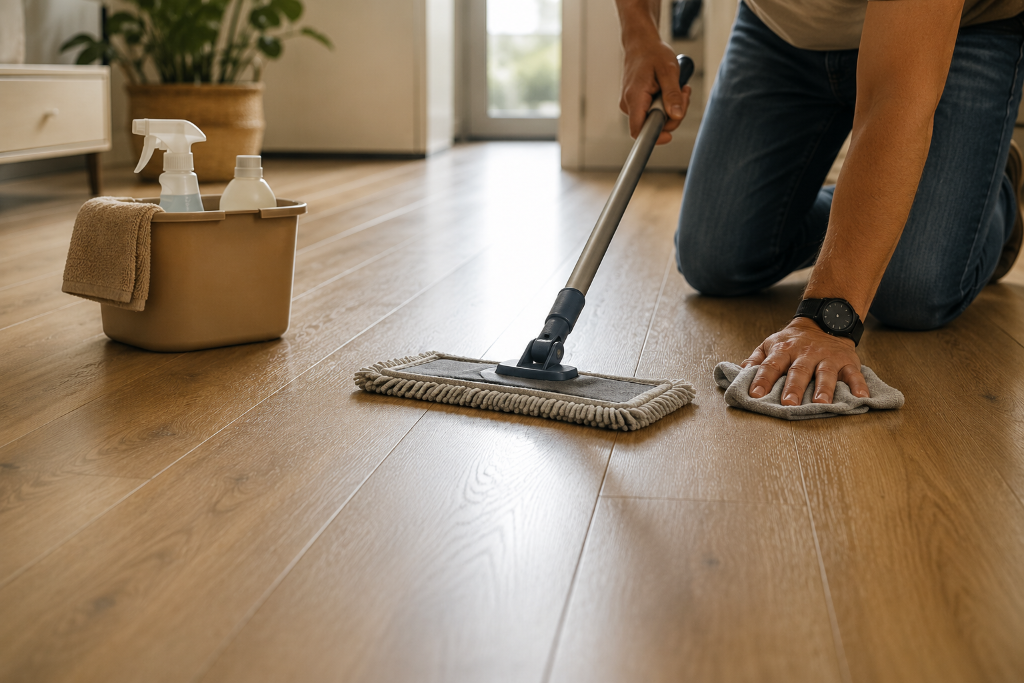
How to Keep Your Floors Looking New: A Complete Maintenance Guide
Your floors are an investment. Follow these simple maintenance tips to keep them looking brand new for decades to come.
How to Keep Your Floors Looking New: A Complete Maintenance Guide
With the right care, quality flooring can last 25+ years and still look stunning. Here's your complete guide to maintaining hybrid, SPC, laminate, and engineered timber floors.
Daily Habits That Make a Difference
Sweep or vacuum regularly — Grit and dust are abrasive. Use a soft-bristle broom or a vacuum on the hard-floor setting to remove particles before they cause micro-scratches.
Use doormats — Place quality doormats at all entry points to capture dirt and moisture before it reaches your floor.
Felt pads on furniture — Attach felt pads to the legs of chairs, tables, and sofas. Dragging furniture is a leading cause of surface scratches.
Cleaning Your Floors
Hybrid & SPC Flooring
- Use a damp (not wet) mop with a pH-neutral cleaner
- Avoid steam mops — the heat can damage the wear layer
- Never use abrasive cleaners or scrubbing pads
Laminate Flooring
- Use a barely damp mop — laminate is not waterproof
- Wipe up spills immediately
- Avoid wax-based products that leave a residue
Engineered Timber
- Use a specifically formulated timber floor cleaner
- Avoid excessive water — it can cause swelling and cupping
- Polish annually to maintain the finish
Dealing With Scratches
For minor scratches on hybrid or SPC floors, a matching colour touch-up pen can work wonders. For deeper scratches, individual planks can often be replaced without affecting the rest of the floor.
Protecting Against Sun Damage
UV rays can fade flooring over time. Use window treatments during peak sun hours, or invest in UV-blocking window film. Many TradePlus products include UV-resistant wear layers for added protection.
Annual Inspection
Once a year, inspect your floors for:
- Gaps between planks (may indicate humidity issues)
- Lifting edges near walls
- Any areas of discolouration
Catch issues early and they're usually simple to fix. Leave them and they become expensive problems.
Need advice on a specific flooring issue? Contact our team — we're always happy to help.